 Handstand Pro
Pike hold for handstand: from your first beginner pike to the press
I did more than six years of gymnastics in a club, starting when I was 8, and I never did a pike there. I found it much later, and it has since taken a place I didn't expect: it's how the app I build gets you upside down for the first time, and it's also what prepares the press, the strength entry into a handstand, which I'm about to start working on as I write this.
So, two uses, at the two ends of the progression. For a beginner, the pike is the gentlest way to get the hips over the shoulders. Later on, it builds the shoulders and trains compression. This page follows that order.
Which pike we're talking about
The word covers several positions, and search results mix them up. In gymnastics and in calisthenics, a pike is the body folded at the hips with the legs straight: sitting on the floor, hanging from a bar, or on your hands with the hips in the air. For the handstand, two of them matter.
- The pike on your hands, hips over the shoulders. It teaches the shoulders to carry your bodyweight with the arms overhead, the way they will in a handstand.
- The seated pike, or compression: pulling the legs toward the chest with the strength of your abs, without help from the arms. That's the one that will decide your press one day.
Why the app starts with the wall pike
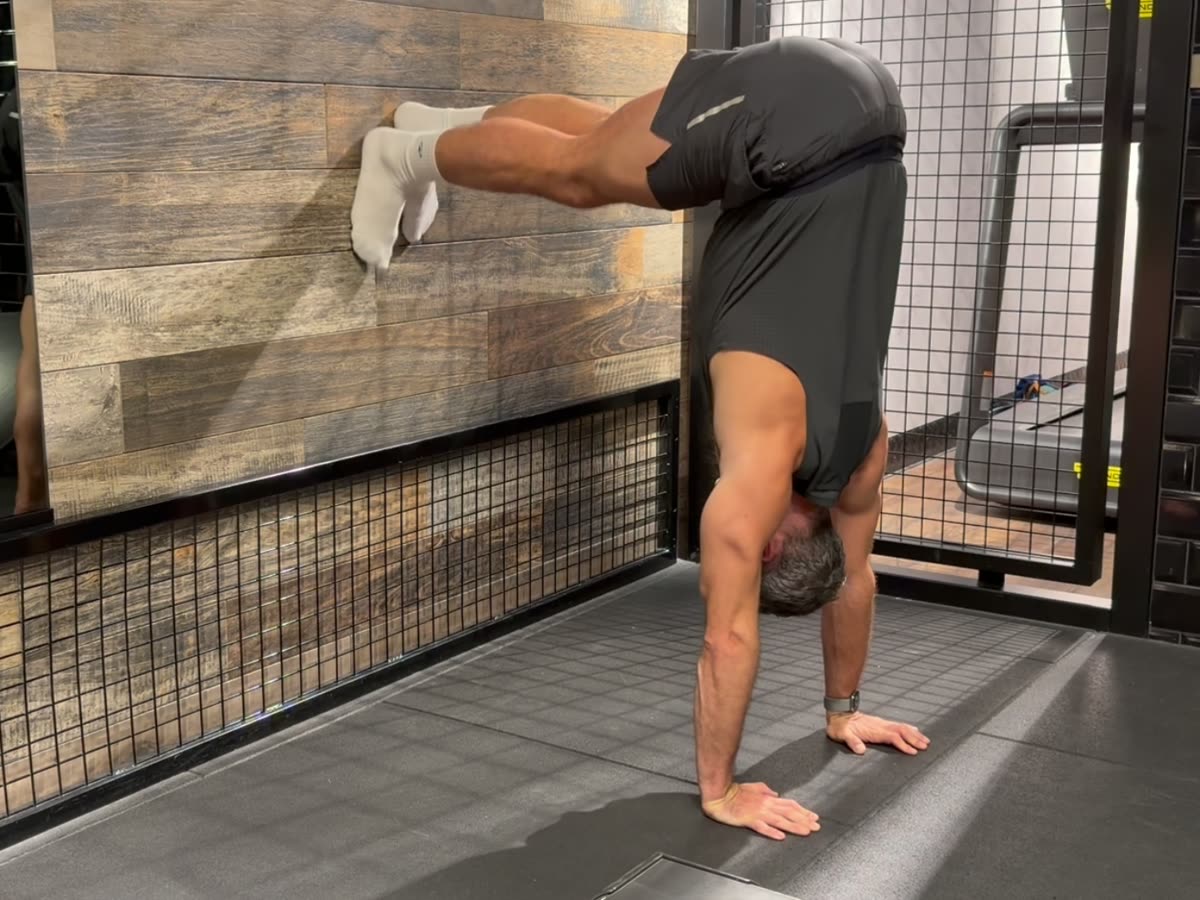
In the app, the "First Inversion" stage opens with the wall pike hold. You sit facing the wall with the soles of your feet against it, turn around, put your hands where you were sitting, then walk your feet up the wall little by little, to about hip height. All the way up, you can come back down in two steps.
I made that choice because of fear. For a lot of people, going straight up against a wall is intimidating, and I'd rather they get there in stages: walking the feet up bit by bit, you find out you can do it, even when the drill looks hard at first, and once that's behind you, progress comes much faster.
Plenty of coaches start with the chest-to-wall walk-up instead, which gives you the full handstand line straight away. It's an excellent drill and it's in the app, in the same stage: wall walks come in the same session, right after the pike, and the chest-to-wall hold a few sessions later. I put it second because, from the very first try, it asks you to accept having your feet far from the floor and your nose close to the wall.
The progression, drill by drill
The order is the app's. Times and sets are given by the app during the session, so here I stick to what each step brings.
The pike hold on the floor
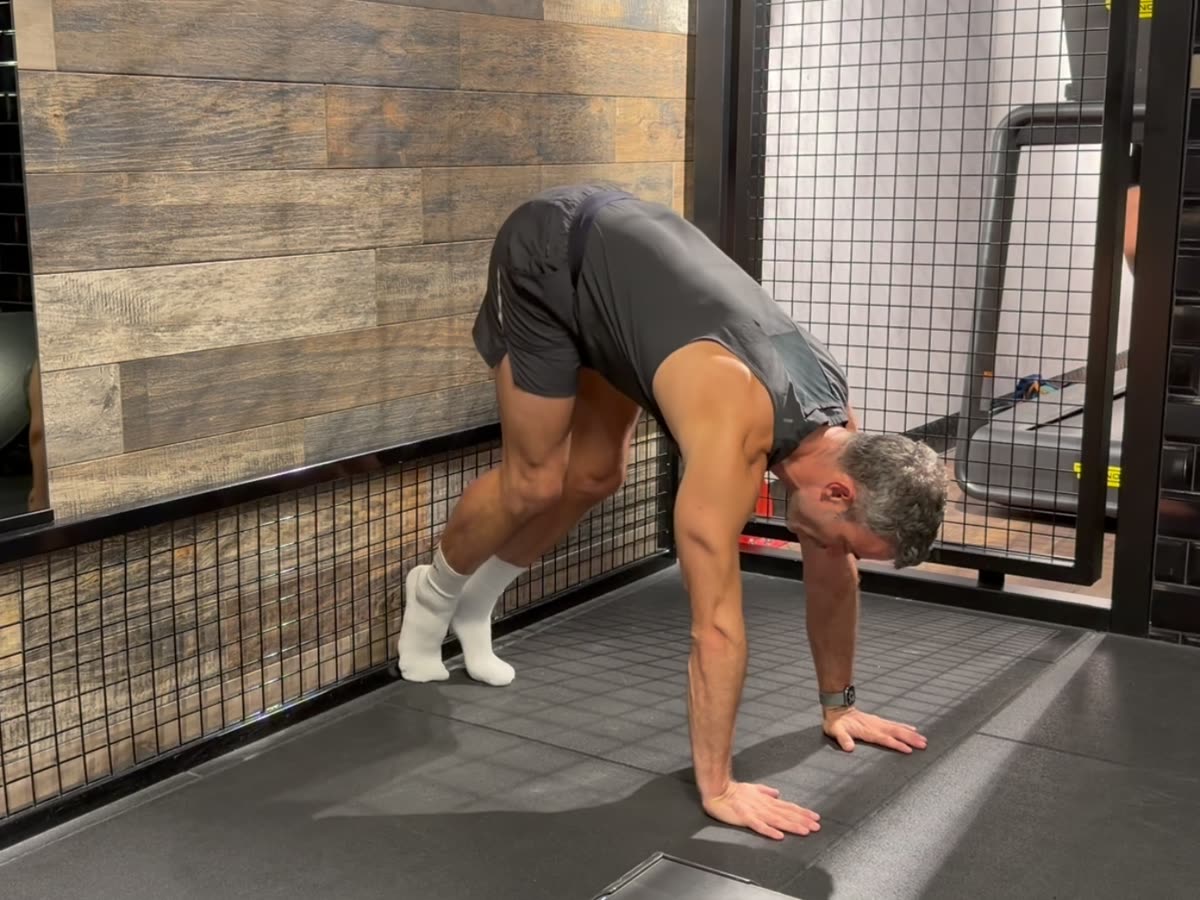
Hands and feet on the floor, hips high, and you walk the hands in toward the feet until you feel the weight tip forward. No equipment, two meters of free floor. It shows up in the very first sessions.
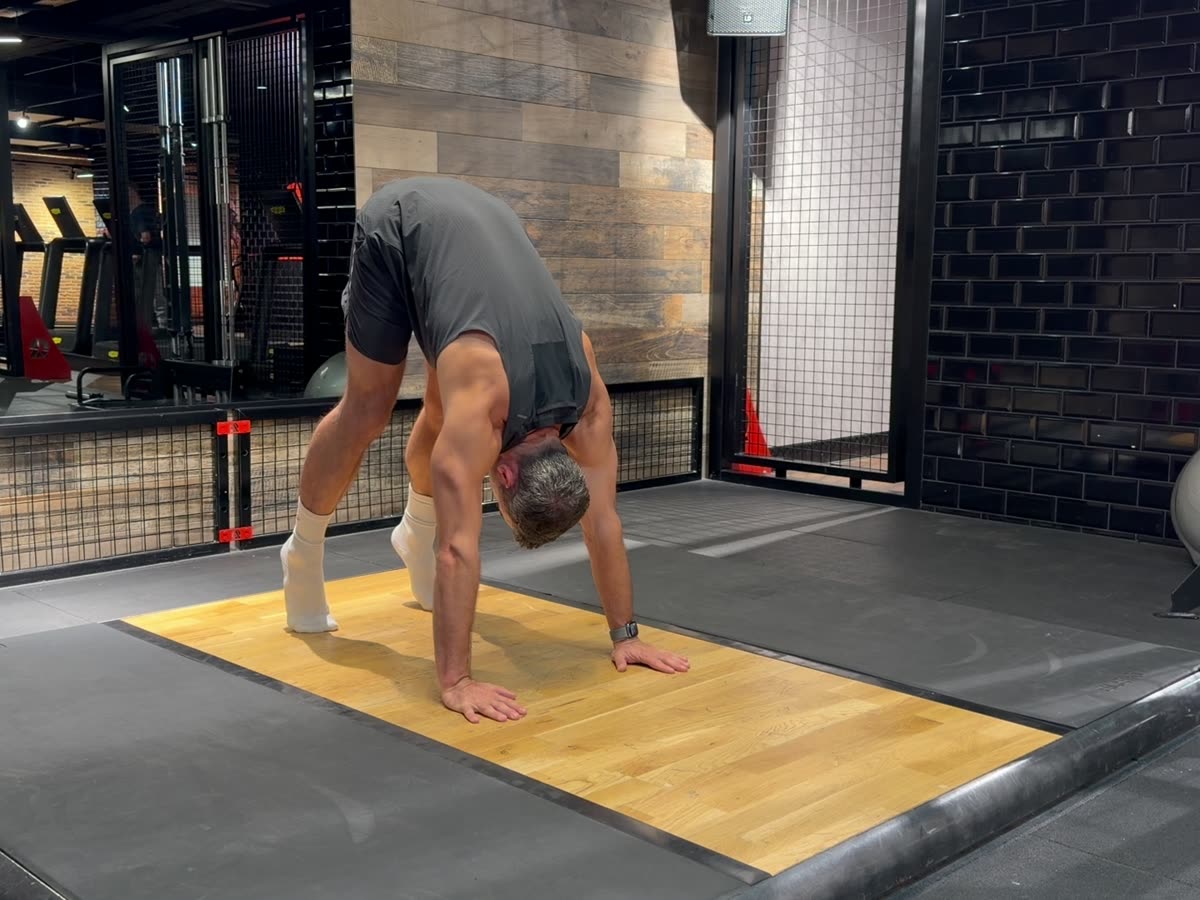
If your hamstrings pull, bend the knees rather than round the back. A pike with bent knees and a straight back loads the shoulders better than one with straight legs and a rounded back. The details are on the pike hold page.
The elevated pike hold
Feet on a box, a step or a couch, hands on the floor. The higher the support, the closer the position gets to a handstand and the more your hands carry. It's the first moment the hips really pass over the shoulders.
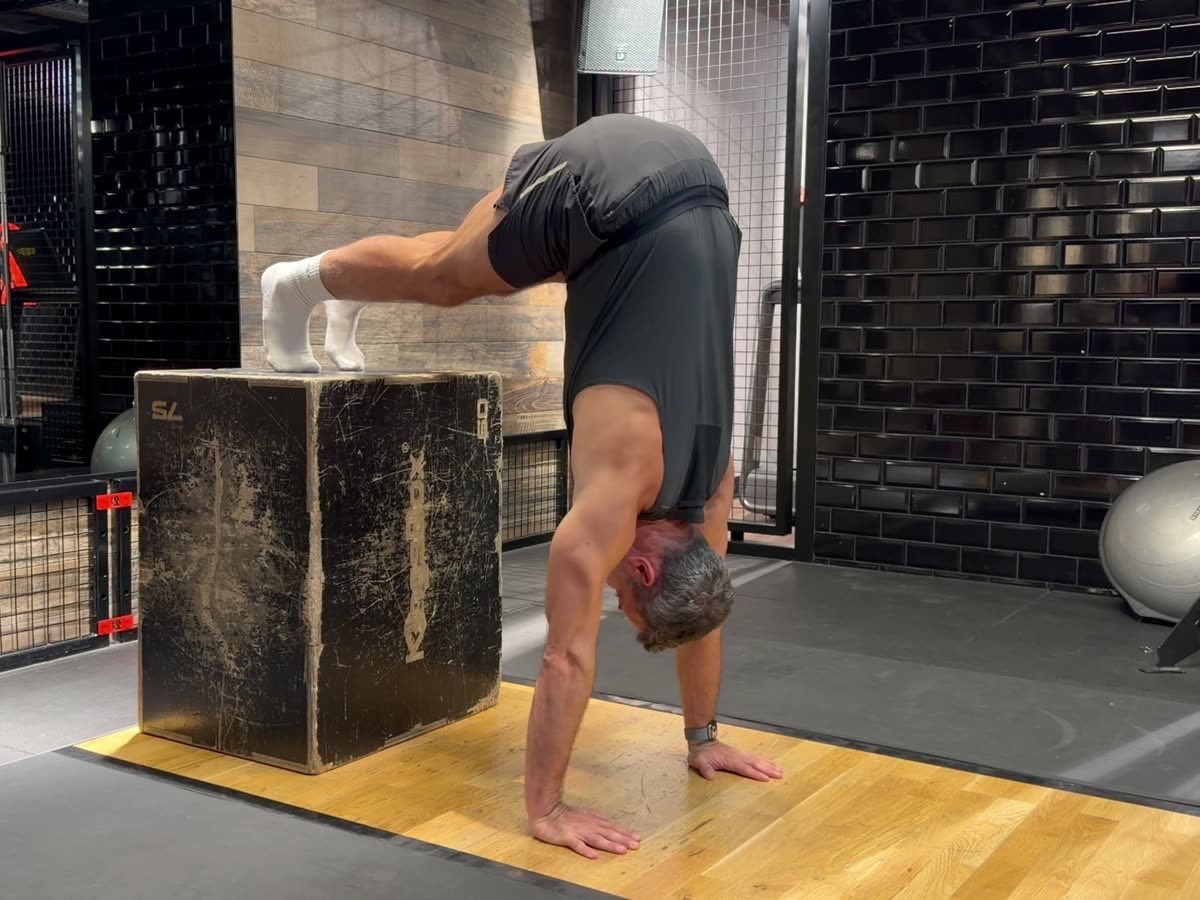
I have a very personal reason to care about this step. After my record in February 2023, the next drills asked me to rest a foot upside down at hip height, I had nothing at that height where I trained, and it's one of the reasons I stopped that year. A stair step or a moving box does the job just fine. Drill page: elevated pike hold.
The wall pike hold
The same L shape, feet on the wall. Two things to watch: the shoulders come right over the hands, otherwise the weight stays in your feet and nothing works, and the ribs stay in, even if it means lowering your feet a few centimeters. Drill page: wall pike hold.
Compression, alongside
It doesn't come after the other three. It goes with them from the first sessions, and then stays in almost every stage of the app, all the way to the advanced shapes. Sitting with straight legs, you lift one leg, then the other, then both, chest toward the thighs. From the outside, almost nothing happens.
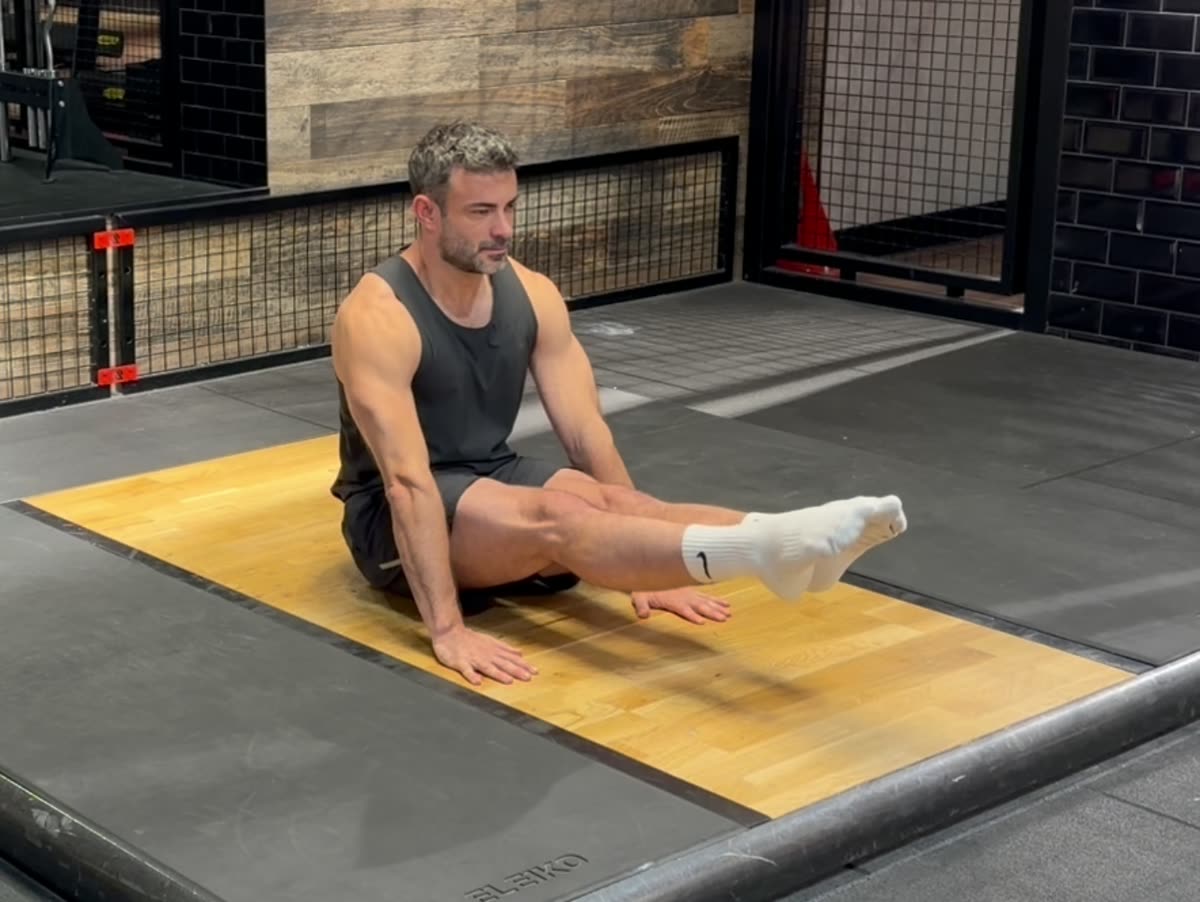
My posterior flexibility is fairly good, thanks to gymnastics but also because I work on it regularly with stretching sessions (I know it matters for aging well, and that's reason enough for me). It helps a lot here. To lift the legs much higher, you also need core strength, and that's what I'm still working on: it's one of my goals for 2027.
When the hamstrings are tight, the pelvis tilts back, the back rounds and the legs stay glued to the floor: a folded cushion under your seat solves a good part of the problem while the flexibility comes. Drill pages: single & double leg raises and pike compressions.
Later on, the press
The press means getting into a handstand without a kick, with strength: the feet leave the floor while the shoulders move forward over the hands. All the compression trained since the start serves this: the legs have to fold against the torso and travel, with no momentum, over your head.
In the app, the Press branch opens after "The Minute", the one-minute freestanding hold. I held for over a minute in October 2026, and as I write this, the press is the next goal I'm going to work on. I haven't started it yet, so I have no lived advice to give on this part. What the app offers: pike push-ups, controlled press negatives against the wall, the press from a box you lower a little each time you succeed, then the straddle press from the floor.
Frequently asked questions
Is the pike enough to learn a handstand?
It's a way in. It teaches the shoulders to carry and makes your first times upside down much less intimidating. What follows is trained against the wall, with the bail and balance. The details are in wall handstand drills.
Do you need to be flexible to do a pike?
Not to start: bend your knees. Hamstring flexibility makes the position higher and more comfortable, and it improves at any age, little by little.
How long should you hold a wall pike?
At first, a few sets of fifteen to twenty seconds. Holding longer with the shoulders behind the hands brings less than holding shorter with the shoulders well forward.
Back to the complete guide: How to learn a handstand